
This document is provided for general informational purposes only and does not constitute legal, accounting, public adjusting, claims consulting, loss valuation, or other professional advice. You should consult your own legal counsel or other qualified professional advisors regarding your specific claim and circumstances, and receipt of this document does not create any client, advisory, fiduciary, consulting, representation, or other professional relationship with Imperium Consulting Group, LLC. This document is provided “as is” without warranty of any kind, and Imperium Consulting Group, LLC disclaims any liability for any loss or damage arising out of or relating to reliance on this document.
Insight
Why 2026 Hurricane Risk Demands Your Attention and How to Prepare
By Imperium Consulting Group
The 2026 Atlantic hurricane season officially begins June 1, indicating that your organization must begin active risk management planning now to mitigate the operational impacts of a potential storm. According to the National Oceanic and Atmospheric Administration (NOAA), there is a 55% chance of a below-normal season; however, NOAA also predicts a 35% chance of a near-normal season and a 10% chance of an above-normal season, underscoring that 2026 could still produce a catastrophic storm capable of significantly impacting your organization.1
“Organizations that prepare before a hurricane forms are consistently in a stronger position to protect their assets and accelerate claims recovery if disaster strikes,” said Frank Russo, Managing Director, Imperium Consulting Group. “The most important takeaway from NOAA’s prediction for 2026 is to strengthen your hurricane risk management strategy now for a more resilient future, ensuring your business is protected in the face of today’s rapidly evolving risk environment.”
As the 2026 Atlantic hurricane season approaches, we have put together a list of the latest hurricane forecasts and risk indicators to strengthen response planning and stay ahead of storm activity and shifting climate signals.
Key 2026 Atlantic Hurricane Risk Indicators and Projections
1. Meaningful hurricane activity is projected.
NOAA predicts a total of 8-14 named storms, with 3-6 predicted to become hurricanes, including 1-3 major hurricanes sustaining winds of 111 mph or higher. That is slightly below the 1991–2020 averages of 14.4 named storms, 7.2 hurricanes and 3.2 major hurricanes; however, it is still a level of activity that warrants serious planning by businesses, property owners and risk managers.2
2. ENSO is shifting, and that can reshape hurricane risk.
NOAA reports that a transition from La Niña to ENSO-neutral is expected in the near term, with ENSO-neutral favored through May–July 2026. NOAA also says El Niño is likely to emerge in June–August 2026 and persist through at least the end of the year.3 Those shifting conditions matter because they can change the wind and storm-development environment across the Atlantic basin.
3. Warm western Atlantic waters remain an important watch item.
Colorado State University hurricane researchers report that sea-surface temperatures in the western tropical Atlantic are warmer than normal, while the eastern and central Atlantic are somewhat cooler.4 That mixed setup does not eliminate risk; it means conditions are uneven and should be monitored closely, especially in the parts of the basin that can influence U.S. and Caribbean impacts.
4. Forecasting and warning tools are improving in 2026.
For the 2026 season, NOAA and the National Hurricane Center (NHC) are operationalizing an updated forecast cone that includes inland tropical storm and hurricane watches and warnings, not just coastal alerts, for the continental United States, Hawaii, Puerto Rico and the U.S. Virgin Islands. NOAA also says the NHC will introduce an experimental cone using ellipses instead of circles and showing 90% of forecast track possibilities rather than the traditional 67%. In addition, Hawaii will now have storm surge watches, warnings and a peak storm surge graphic.5
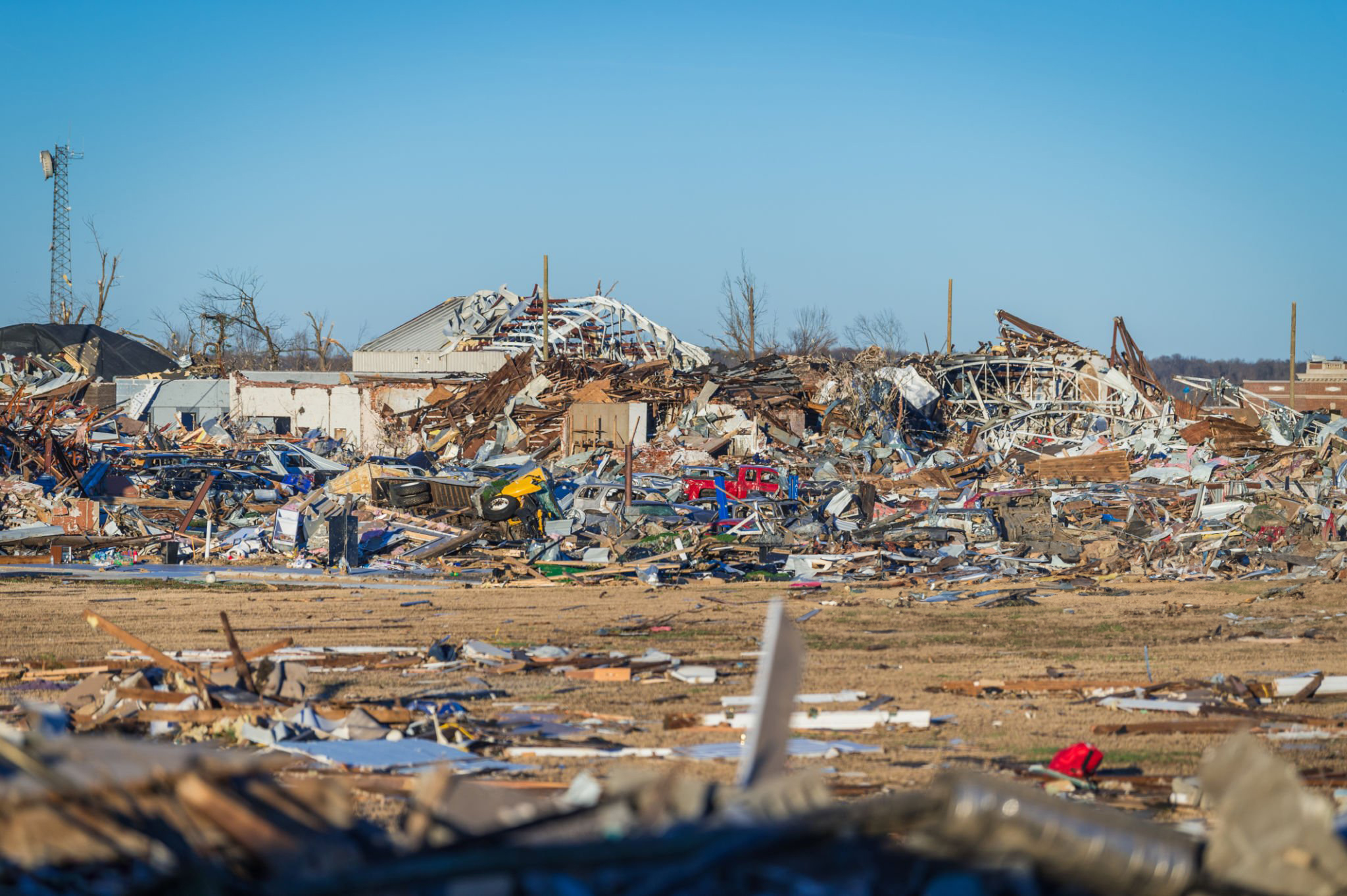
5. It only takes one storm to create major disruption.
Colorado State University’s April outlook estimates a 32% probability of at least one major hurricane making landfall somewhere along the entire continental U.S. coastline, including 15% for the U.S. East Coast (including the Florida peninsula), 20% for the Gulf Coast and 35% for the Caribbean. For organizations with facilities, vendors, employees or customers in those regions, a single event can be enough to trigger operational and financial disruption.6
How Imperium Can Help Organizations Prepare for Weather-Related Risk
Hurricane preparedness is not only an operational issue; it is a financial recovery issue. The businesses that respond best are often the ones that have already thought through documentation, decision-making and recovery strategy before a storm arrives.
Imperium helps organizations prepare for and respond to catastrophic events by bringing structure to the financial side of recovery. From documenting losses and organizing claim support to helping clients move with greater clarity after an event, our team works to position organizations for a more informed, timely and well-supported recovery.
As the 2026 Atlantic hurricane season approaches, now is the time to review exposure, strengthen internal readiness and put the right recovery framework in place before it is needed. Reach out to the hurricane risk management experts at Imperium for more information on hurricane preparedness and disaster recovery this 2026 season.
Sources
- “NOAA Predicts Below-Normal 2026 Atlantic Hurricane Season.” Noaa.gov, www.noaa.gov/news-release/noaa-predicts-below-normal-2026-atlantic-hurricane-season.
- “Climate Prediction Center - Atlantic Hurricane Outlook.” www.cpc.ncep.noaa.gov, www.cpc.ncep.noaa.gov/products/outlooks/Background.html.
- “El Nino and La Nina Information.” Weather.gov, www.weather.gov/twc/enso.
- “CSU Researchers Predicting Somewhat Below-Average Atlantic Hurricane Season for 2026.” Walter Scott, Jr. College of Engineering, engr.source.colostate.edu/researchers-predicting-somewhat-below-average-atlantic-hurricane-season-for-2026/
- “National Hurricane Center to Issue New Forecast Cone Graphics for 2026 Hurricane Season.” Noaa.gov, www.noaa.gov/news-release/national-hurricane-center-to-issue-new-forecast-cone-graphics-for-2026-hurricane-season.
- “Extended Range Forecast of Atlantic Hurricane Activity for 2026.” Colorado State University, https://tropical.colostate.edu/Forecast/2026-04.pdf